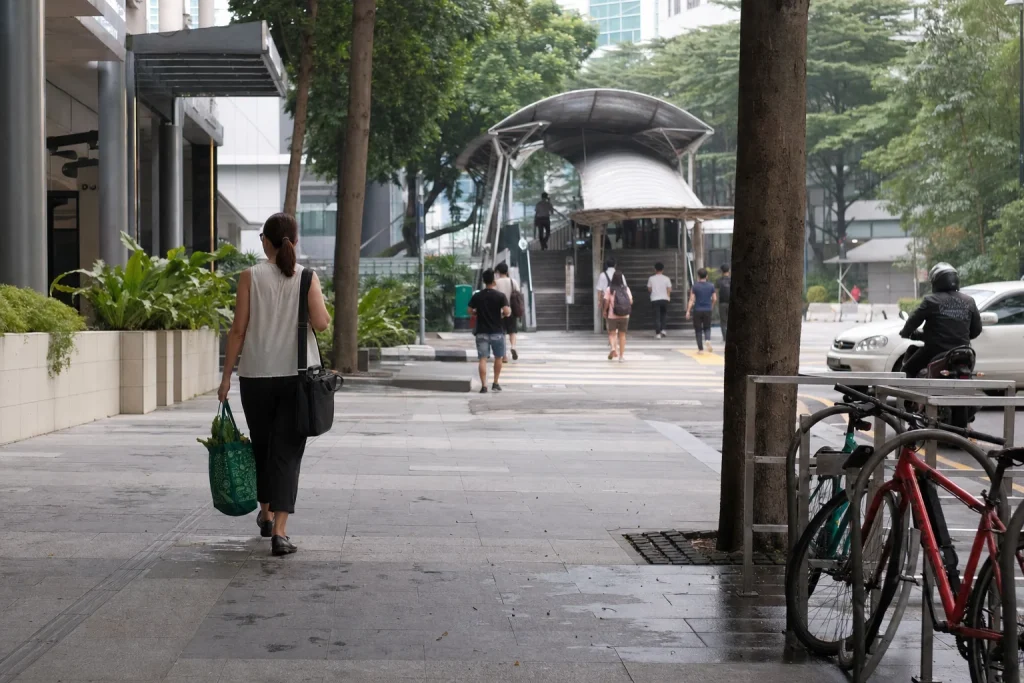
It is possible for some households to live without owning a car in central Kuala Lumpur, especially when work, rail, groceries and everyday services sit on practical routes. But “near transit” is not enough. Weather, late journeys, dependants and irregular trips can turn a car-free plan into an expensive series of compromises.
For wider neighbourhood context, see the Central Kuala Lumpur property guide.
DBKL’s Kuala Lumpur Structure Plan 2040 sets long-term goals for stronger public transport and active mobility. Those policies support the direction of travel, but residents must test the network that exists around a particular building today.
Define car-free for your household
Some people mean no private vehicle but occasional ride-hailing or car rental. Others want nearly every journey to work by rail, bus or walking. Write down the acceptable exceptions before comparing homes.
A household with children, mobility needs, shift work or frequent outstation travel may need different alternatives from a single office worker. “Car-light” can still produce substantial savings without forcing every trip onto public transport.
Map one normal week
List work, groceries, school, healthcare, exercise, social visits and religious or family commitments. Use MyRapid’s official integrated map to identify rail routes, then add the real first and last mile.
Mark trips that happen early, late or with luggage. A network that works at 6 p.m. may not offer the same convenience after the last practical connection.
Test the front door to platform
Time the walk from lobby to station gate and correct platform. Count crossings, exposed segments, stairs and lift dependence. Repeat the route in the opposite direction and after rain.
Buildings connected through retail or private concourses should have an alternative route outside those opening hours. Confirm whether residents retain access when public areas close.
Carry the groceries home
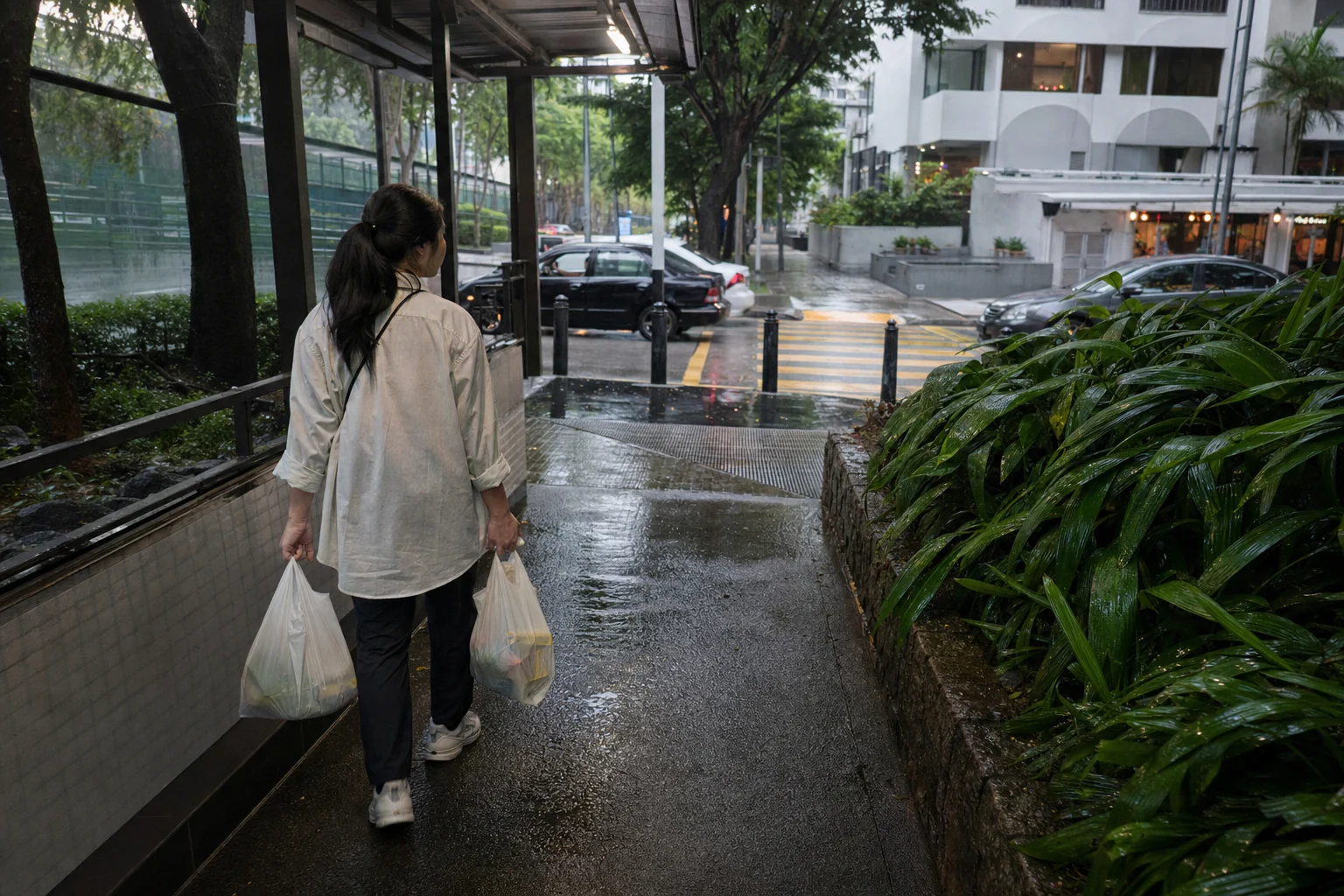
Walk to the supermarket, buy a realistic load and return. A short route can become difficult with heavy bags, a stroller or tropical rain. Check trolley boundaries and whether deliveries can be received securely.
Plan for healthcare and urgent trips
Identify a clinic, pharmacy and hospital route before an urgent need arises. Consider travel at night, during heavy rain and when the passenger is unwell or has limited mobility.
Keep ride-hailing, taxi or a trusted transport contact as a contingency. Car-free living does not require pretending every trip is suitable for walking or rail.
Check the late-night return
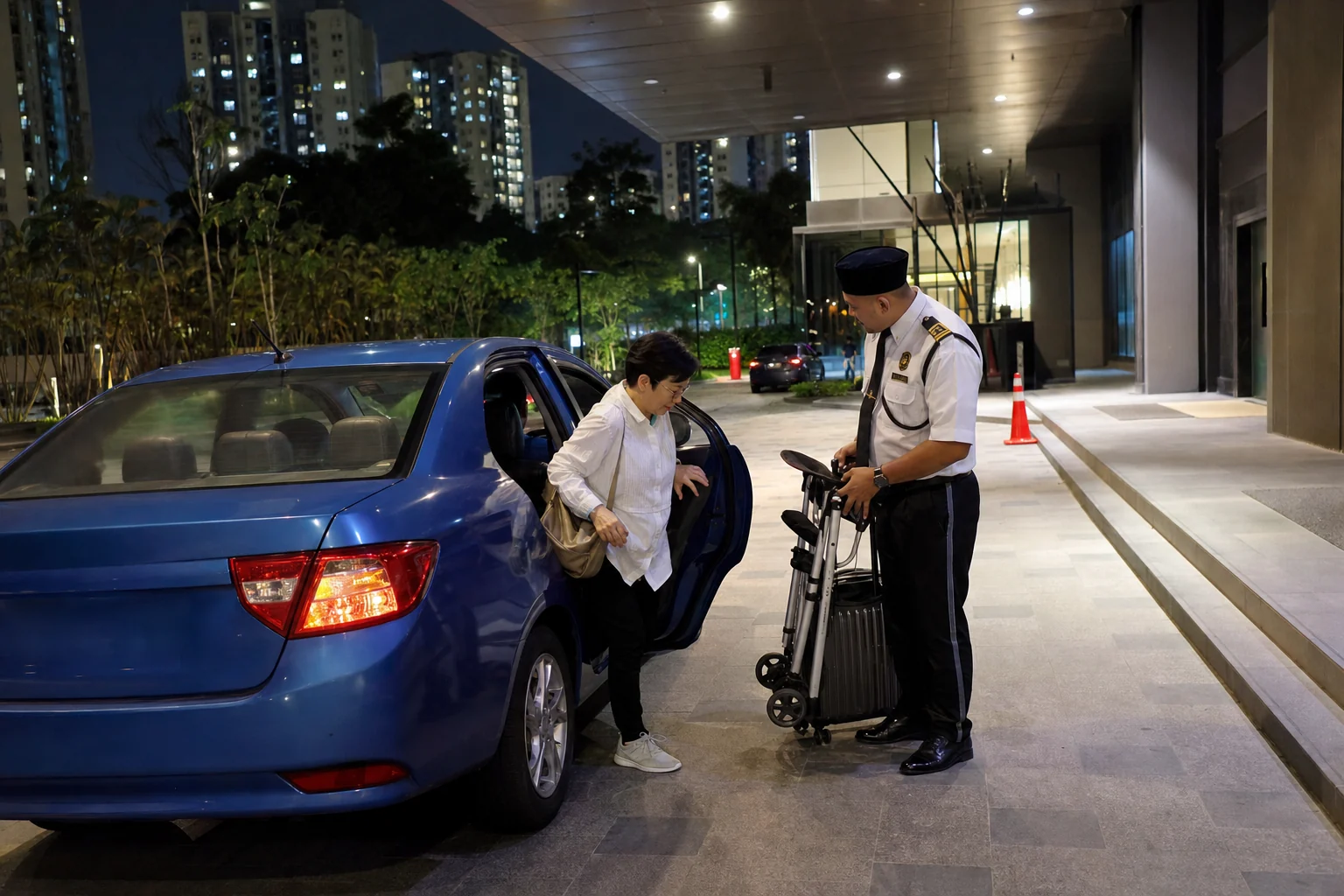
Walk from the station or designated pick-up point to the lobby after dark. Observe lighting, active frontage, crossings and security. Test whether the ride-hailing pin is easy for drivers to find and whether vehicles can wait safely.
People working shifts should compare actual service hours and live updates rather than relying on the system’s daytime frequency.
Budget the alternatives honestly
Compare car ownership with rail fares, ride-hailing, grocery delivery, occasional rental and intercity transport. Include parking bundled into the rent or purchase even if unused; sometimes a unit without a bay changes the price or future flexibility.
Track a trial month. Actual spending and waiting time are more useful than an optimistic estimate.
Test large and irregular journeys
Plan airport trips, furniture purchases, family visits and travel outside the rail network. Check car-share or rental availability, loading rules and whether the lobby accepts larger deliveries.
If these journeys happen weekly rather than occasionally, the household may be better described as car-dependent despite a rail commute.
Choose the building, not just the district
A practical car-free home needs a workable station route, secure parcel handling, convenient drop-off, nearby groceries and useful street access. Two towers in KLCC, Bukit Bintang, TRX or BBCC can perform very differently.
Do not pay only for a district label. Test the exact entrance and the destinations that matter.
A seven-day car-free trial
- Commute at peak hour from the shortlisted building.
- Buy and carry a normal grocery load.
- Complete one journey during rain.
- Return after normal rail peak hours.
- Travel to a clinic or hospital route.
- Handle one bulky delivery or luggage trip.
- Record fares, ride-hailing cost and waiting time.
- Identify a backup for every essential journey.
Final perspective
Central Kuala Lumpur gives some residents the strongest chance in Malaysia to live without a private car, but success depends on a network of reliable options rather than one nearby station.
Run the household’s real week before committing. If most trips work and the exceptions have affordable backups, car-free or car-light living can be a practical choice rather than a slogan.