The cost of owning a condo
A condo advertised at “RM0.40 per sq ft” can cost more each month than you first expect. The sinking fund may be extra, and a building with major work coming up deserves a closer look.
Start with the bill for the exact unit. Then check whether the building has enough money for the work ahead.
Two charges, two different jobs
Maintenance charges cover the building’s regular running costs, such as cleaning, security and servicing common facilities. The sinking fund sets money aside for bigger capital expenses, such as repainting and replacing shared equipment.
For Joint Management Bodies and Management Corporations, the sinking fund contribution is at least 10% of maintenance charges. The rules discussed here come from the Strata Management Act 2013, which applies in Peninsular Malaysia and Labuan.
A simple monthly example
Suppose a 900 sq ft unit is quoted at RM0.40 per sq ft, excluding a 10% sinking fund contribution. These are example figures, not a market rate.
| Item | Amount |
|---|---|
| Maintenance: 900 × RM0.40 | RM360 |
| Sinking fund: 10% × RM360 | RM36 |
| Monthly total | RM396 |
| Over 12 months | RM4,752 |
If the advertised rate already includes the sinking fund, don’t add it again. Ask management to confirm the amount, payment schedule and any other charges for that unit.
The statutory charging basis is generally allocated share units or share units, not simply the floor area in an advertisement. Share units represent the unit’s share of the scheme. Use the actual bill to settle the calculation rather than assuming every 900 sq ft home pays the same.
Your own utilities, loan instalment and other ownership costs still sit outside this example. If you’re comparing different property labels, our serviced residence and condo guide explains what else to check.
A big fund balance can be misleading
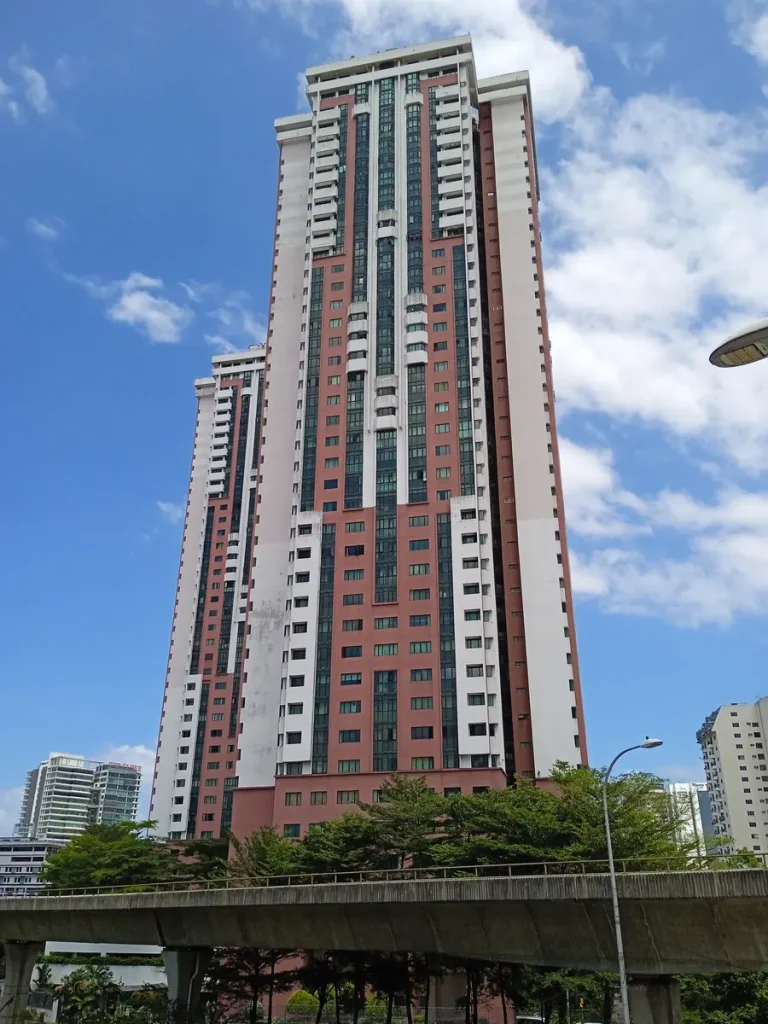
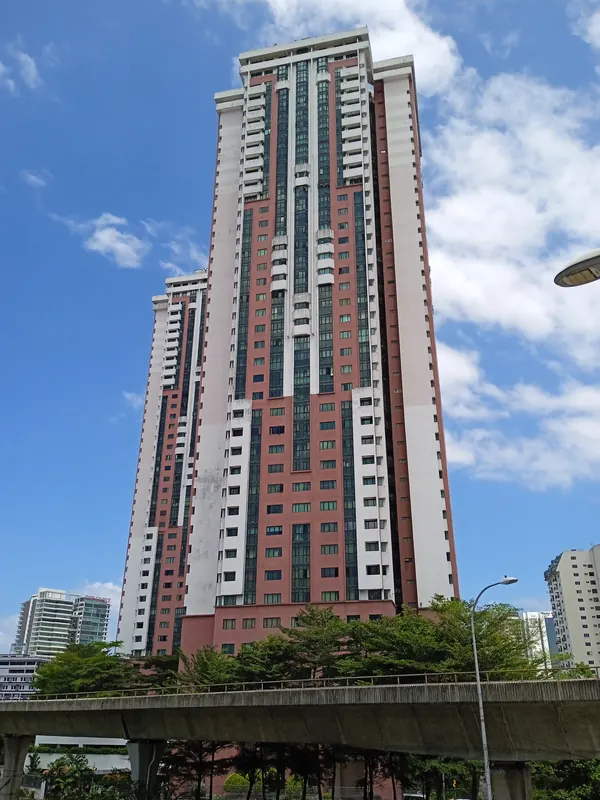
Imagine management reports RM600,000 in the sinking fund. That sounds reassuring until you find RM450,000 is already committed to approved work. Only RM150,000 remains before allowing for other projects. This is an illustration, not the account of the building pictured.
“After paying for work already approved, how much will be left, and what needs replacing next?”
Look at the maintenance account separately. Money owners owe but haven’t paid is not cash available to pay the cleaners tomorrow. Ask whether arrears are rising and whether the building is keeping up with its suppliers.
A low fee isn’t automatically bad. A simpler building may genuinely cost less to run. But a low fee alongside unpaid suppliers, postponed repairs and a shrinking reserve needs an explanation. An expensive fee isn’t proof of good management either.
At a viewing, compare what you see with the planned work. If a lift is out of service, ask whether the repair has a budget and a completion plan. That tells you more than another photograph of the lobby.
What to ask for before you buy
- The unit’s latest statement. Confirm regular charges and any outstanding amounts. Have your purchase lawyer establish how unpaid sums will be settled in the sale.
- The latest audited accounts and current budget. Check the year covered. Older accounts need a current update, especially if major work has started since then.
- Recent meeting minutes and approved work notices. Look for fee changes, extra collections and major repairs. Ask for the amount affecting your unit and when payment is due, rather than dividing a project cost equally yourself.
The certificate doesn’t replace reading the accounts or checking the purchase terms. Our subsale buying guide covers the wider checks.
Before deciding, you should be able to write down three numbers: your regular bill, any confirmed extra payment, and the money left after approved building work. If one is missing, that is the next question to resolve.