BBCC · Neighbourhood guide
BBCC suits a routine built around LaLaport, nearby groceries and Hang Tuah station. It is worth considering if you want those things close to home. If most of your week revolves around Pavilion, start with the Bukit Bintang side instead.
The two places are not interchangeable. Here is where BBCC fits, what you can actually use nearby and how to choose a home without getting distracted by the development name.
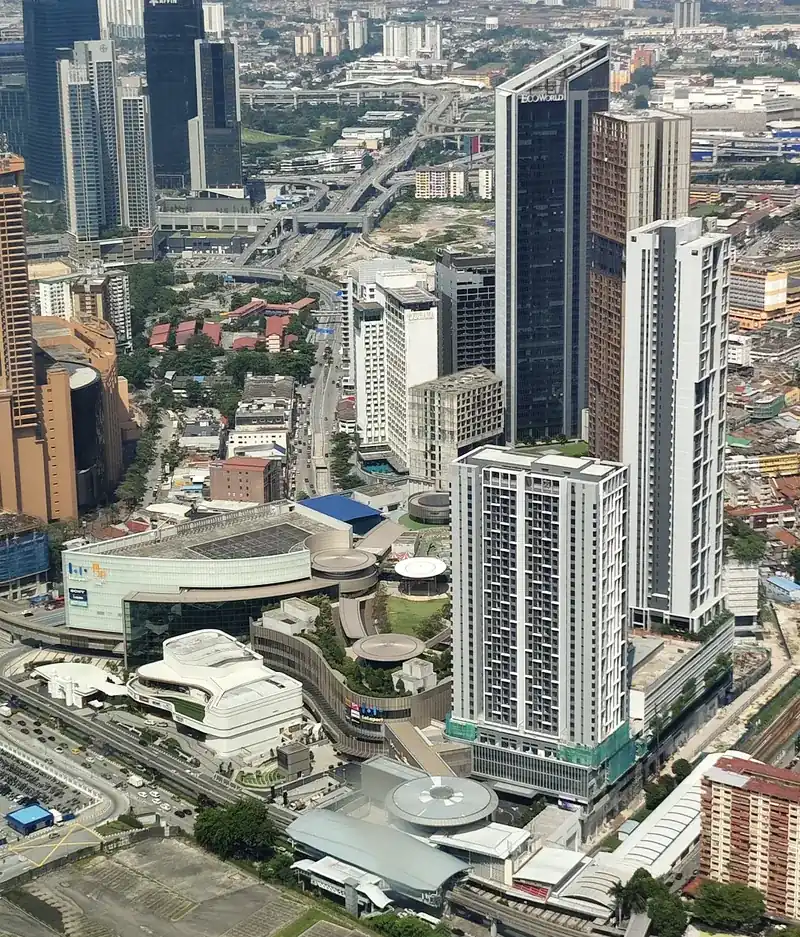
BBCC is the LaLaport side of the city
BBCC stands for Bukit Bintang City Centre. Its main shopping landmark, LaLaport, is at 2 Jalan Hang Tuah. Pavilion Kuala Lumpur is a separate destination on Jalan Bukit Bintang. A listing described as “Bukit Bintang” could be referring to quite different surroundings.
Use the building name when comparing homes. Lucentia, for example, tells you considerably more than “luxury condo near Bukit Bintang”. For the shopping and dining streets around Pavilion, read our Bukit Bintang living guide.
The names you will see around BBCC
| Name | What it is |
|---|---|
| LaLaport | Shopping and dining |
| Lucentia / SWNK Houze | Separate residential projects |
| Menara EcoWorld | Office tower |
| GSC LaLaport BBCC | Cinema in the Entertainment Hub |
| Zepp Kuala Lumpur | Concert and event venue |
The wider precinct also includes The Labs and TUAH 1895. For a film, a concert or a property viewing, use the destination’s own entrance pin. The mall drop off is not automatically the right one.
A masterplan can show future phases alongside existing buildings. It is useful for understanding the development, but it is not a list of places already open.
Understand the building before choosing the address
A home in Lucentia or SWNK Houze and a listing described only as “near BBCC” are not the same thing. The latter could be on a neighbouring street, with a different walk to the shops and station.
Being within the wider development does not give every resident access to every pool, gym or private lobby. For a rental shortlist, ask the agent for three things in one message: the tower name, the residential entrance pin and the facilities included with that unit.
For the apartment itself, compare the usable living space, bedroom outlook and parking arrangement. A convenient neighbourhood cannot make an awkward layout fit your furniture. Our condo viewing checklist covers those details.
Groceries and everyday stops are in LaLaport
You do not need to travel to Pavilion for a grocery run. These are useful starting points in the LaLaport shop directory.
| Need | Where to go |
|---|---|
| Groceries | Jaya Grocer · Lower Ground 1 |
| Pharmacy | Health Lane · Lower Ground 1 |
| Toiletries | Guardian · Level 2 |
| A meal | Hawker Chan · Lower Ground 1 |
Jaya Grocer’s listing gives hours of 9.30am to 10pm; individual shops can have different opening times. For groceries before the main mall opens, confirm the supermarket entrance rather than assuming every retail door is available.
The useful housing comparison is the route from the supermarket to your lobby. A direct path with a lift is more convenient for heavy bags than a shorter route involving stairs. Give that detail more weight than a listing’s “steps from shopping” claim.
Hang Tuah gives you LRT and Monorail access
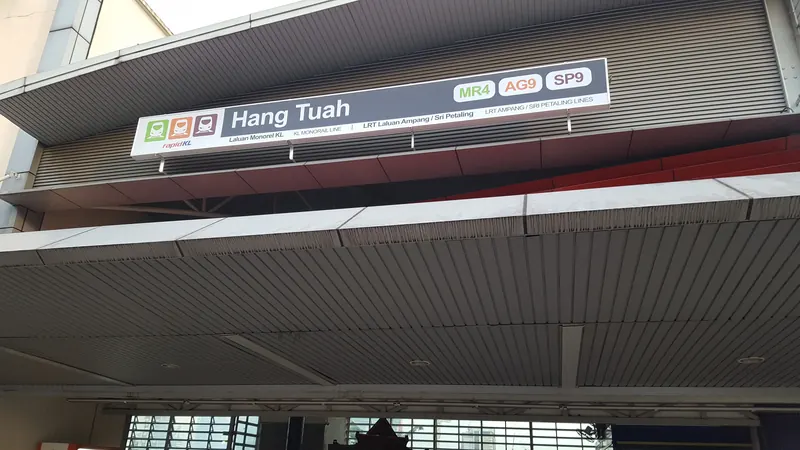
Hang Tuah serves the Ampang and Sri Petaling LRT lines and the KL Monorail. It is not an MRT station. LaLaport has a direct station connection, but that does not establish the route from every surrounding condo.
Imbi is one stop away and Bukit Bintang is two. In the opposite direction, the Monorail goes to KL Sentral without a train change. Waiting and the walk to the platform still need to be added to your journey. Rapid KL’s Monorail information has the station sequence and service hours.
If your office is on an MRT line, compare the transfer as well as the station distance. Our car free living guide helps you weigh rail use against the cost of keeping a car.
Choose for the journey home, too
For someone coming home late, a residential entrance that works independently of mall opening hours matters more than a daytime shopping shortcut. Get that route from building management before committing, and save the residential pickup pin rather than the mall pin.
For a light sleeper, give the bedroom position more weight than the view. A unit facing a railway, a busy road or a loading area deserves a closer look at noise with the windows closed. The noise and privacy guide explains what to listen for.
Choose BBCC for groceries, rail access and the convenience you will actually use. Choose the Pavilion side if that is where you spend most evenings. For KLCC and TRX as well, the central Kuala Lumpur area comparison is the next useful read.