
KLCC and TRX both offer central Kuala Lumpur rentals near rail, offices, shopping and urban parks. Their day-to-day patterns are different. KLCC is an established district with a wide range of building ages and micro-locations, while TRX is a newer financial and mixed-use district organised around an MRT interchange and integrated public realm.
For wider neighbourhood context, see the Central Kuala Lumpur property guide.
Renters should compare actual units and commuting routes rather than treating either district as one uniform product.
Start with the workplace journey
Suria KLCC’s official access information identifies KLCC station on the Kelana Jaya LRT line. TRX’s official district information identifies its station as the interchange between the Kajang and Putrajaya MRT lines.
Complete the full trip from each unit’s lobby to the workplace at peak time. Include station entrances, transfers, weather exposure and the final walk. A direct line is not always faster when the building sits on the far side of a large district.
Compare established and newer building choice
KLCC offers a broad mix of older and newer condominiums, serviced residences and mixed-use properties. This creates more variation in layouts, maintenance standards, lift provision and rental pricing.
TRX’s residential supply is newer and sits within a still-developing district. Modern access and integration may appeal, but renters should inspect defect resolution, surrounding works and how completed components operate.
Decide which park routine fits
KLCC’s official materials describe KLCC Park as a mature 50-acre green space. Its larger trees, established paths and long operating history can support walking and exercise close to nearby homes.
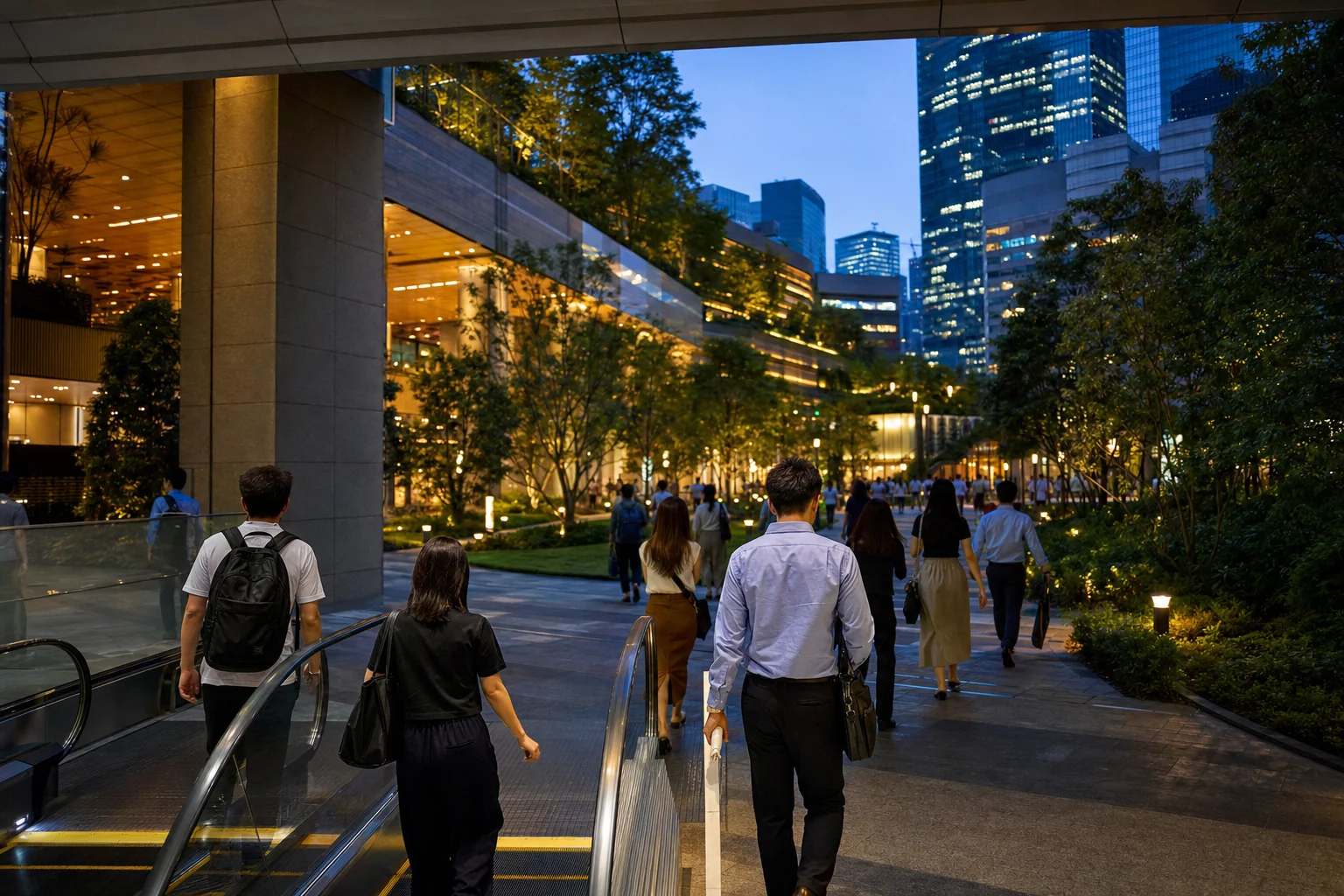
TRX’s official site describes a 10-acre rooftop city park integrated with retail and the public realm. It offers newer landscape, play and event spaces. For either district, walk from the unit to the park entrance and check current hours and event restrictions.

Inspect noise at the exact unit
In KLCC, possible sound sources include traffic, nightlife, hospitality, events and construction. In TRX, offices, retail, events, road works and ongoing phases can affect different orientations.
Visit after work and on a weekend night. Listen in bedrooms with windows closed, then check balcony or operable glazing. Do not infer quietness from the floor number alone.
Test groceries, meals and late access
Both areas offer major retail and dining, but a renter still needs ordinary groceries, pharmacy, laundry and affordable meals. Walk to realistic options rather than only premium destinations.
Check whether a convenient route depends on mall opening hours. Identify a sheltered alternative for early or late journeys.
Observe residential circulation
Ask whether residents share lobbies, lifts, parking or facilities with hotel guests, offices, retail users or short-stay occupants. Watch visitor registration and food-delivery handling during the evening peak.
Newer does not automatically mean more private, and older does not automatically mean poorly controlled. Building management and physical separation matter more.
Calculate the all-in monthly cost
Compare rent, utilities, internet, parking, air-conditioning needs and any recurring service. Confirm which utilities remain in the owner’s name, how deposits are held and whether furnished items are included in the inventory.
A slightly higher rent may reduce commuting or parking costs. Conversely, a convenient address can still be poor value when the unit has inefficient cooling, weak storage or services the household will not use.
Read the lease and house rules
Document furniture and condition at handover. Clarify repair responsibilities, notice requirements, access for repairs, renewal terms and the process for returning deposits.
Review building rules for pets, visitors, deliveries, move-ins, renovation, parking and short-term occupation. When a term is unclear, obtain appropriate legal advice before signing.
A renter’s comparison test
- Run both workplace journeys at peak time.
- Visit the unit in daylight and after dark.
- Walk to groceries, park and an ordinary meal.
- Inspect lifts, deliveries, visitors and parking.
- Record external works and possible view changes.
- Calculate complete monthly occupancy cost.
- Check inventory, defects, utilities and house rules.
- Verify every verbal promise in the written lease.
Which renter may prefer each district?
KLCC may suit renters who want an established central district, Kelana Jaya Line access, mature park space and wider building choice. TRX may suit renters who prioritise Kajang and Putrajaya MRT interchange, newer integrated surroundings and proximity to the financial district.
The final result can reverse for two buildings on different edges. Unit condition, management and the real station walk should decide the shortlist.
Final perspective
KLCC versus TRX is best treated as a lifestyle and commute decision, not a prestige contest. Both can provide convenient central living, and both contain units whose noise, access or cost may not fit a particular renter.
Compare the same weekly routine from each front door and read the lease carefully. The better rental is the one that removes friction without adding costs or restrictions the household will resent.