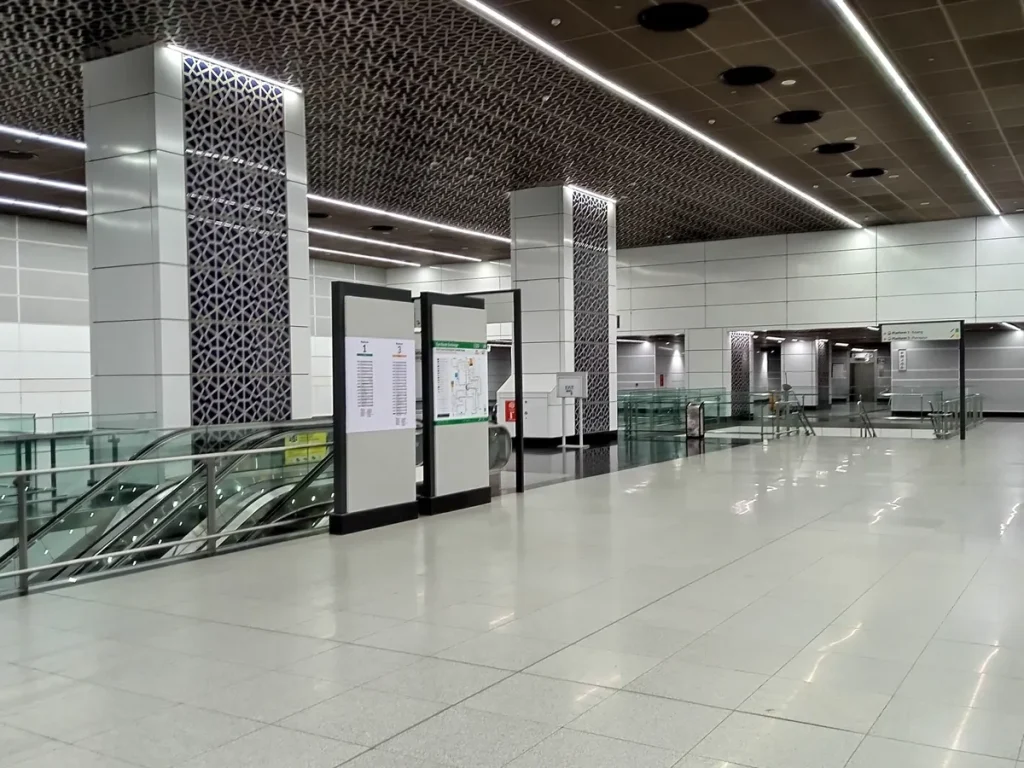
TRX · Getting around
Two MRT lines are useful when they take you where you actually go. TRX gives you direct journeys to Bukit Bintang, Pasar Seni, Conlay and Persiaran KLCC, but your home’s entrance still matters.
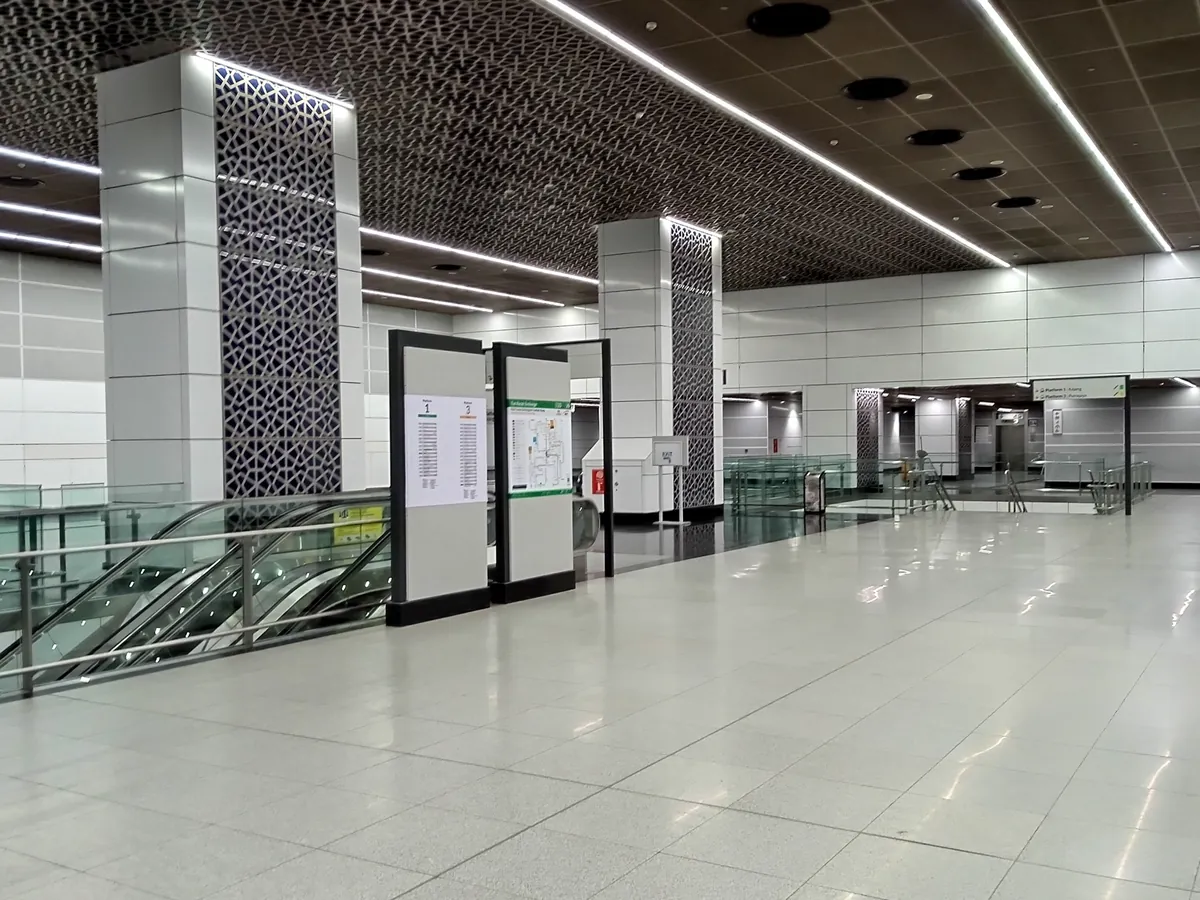
Start with your destination
Where can you go without changing trains?
TRX serves the Kajang and Putrajaya lines. These six trips all run directly from TRX. The stop count includes your arrival station, not TRX itself.
| Destination | Line | Stops |
|---|---|---|
| Bukit Bintang | Kajang | 1 |
| Pasar Seni | Kajang | 3 |
| Muzium Negara | Kajang | 4 |
| Conlay | Putrajaya | 1 |
| Persiaran KLCC | Putrajaya | 2 |
| Ampang Park MRT | Putrajaya | 3 |
Stop counts follow MRT Corp’s station lists. They are not journey times and exclude waiting, walking and temporary service changes.
Check the line name too. For all six trips, travel towards Kwasa Damansara. Both lines share that terminal name, so “towards Kwasa Damansara” alone does not identify the train you need.
Muzium Negara is the MRT stop connected to KL Sentral; allow for the walk before a connecting service. Likewise, Persiaran KLCC MRT is not KLCC LRT. Choose the arrival station around your final address, not the familiar name.
Use MRT Corp’s station lists to check the line and sequence for other destinations.
What is actually connected?
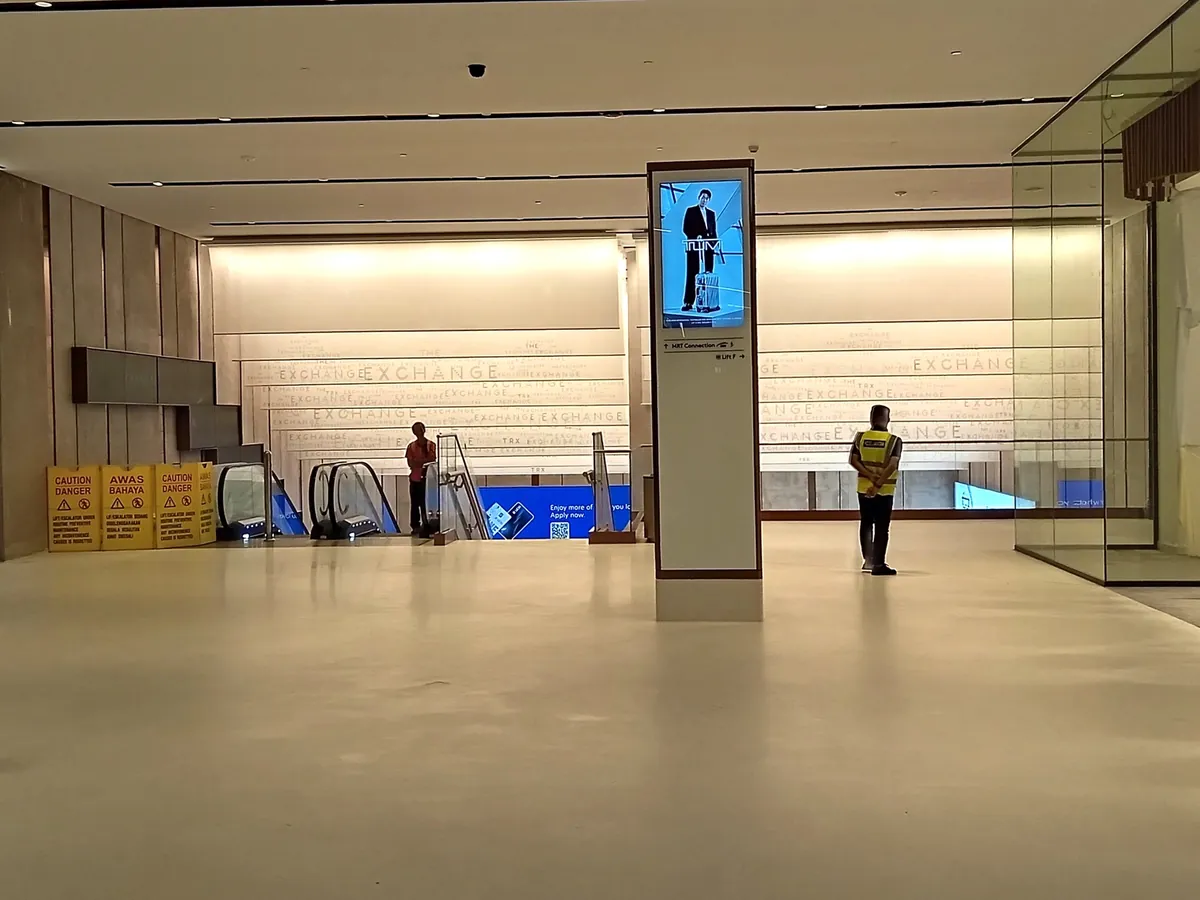
The mall link is confirmed. Your condo route is separate.
The Exchange’s arrival directions confirm a pedestrian connection between TRX MRT and the mall’s Concourse level.
That is useful for a station to mall trip. It does not prove that a nearby condo has direct, covered or unrestricted access. Ask to see the route from the resident entrance, not just a line drawn between two map pins.
Three phrases that need different evidence
A location claim
Request the exact station entrance and walking route. Distance alone doesn’t show crossings, changes of level or access through private property.
A building connection
Find out where the link enters the mall and when residents can use it. You still need the remaining route to the station.
A route to demonstrate
Have management explain the complete route, any access card requirements and what happens when a connecting door is closed.
These explain listing language; they are not certifications of any named residence.
Compare minutes, not just metres
For example, imagine one apartment takes 12 minutes from its front door to the platform, while another takes seven. Over 20 workdays with a return trip each day, that five minute difference adds up to 200 minutes.
Those are hypothetical times, not measurements of TRX buildings. They show why the lift, lobby exit and station circulation belong in your comparison. For the surrounding pedestrian connections, use our Central KL walking guide.
When is the location worth considering?
TRX is a useful shortlist option when you regularly use both MRT lines, or when two people in your household need different lines. If both of you only need one line, compare homes near other stations on that line too.
If you work late, check Rapid KL’s current timetable for your station and direction. Mall trading hours do not tell you when the last train leaves or whether a private connecting door stays open.
Keep the wider decisions separate: our TRX neighbourhood guide covers daily life, while the car free living guide helps with transport budgeting.
Comparing rental locations? Read KLCC versus TRX for renters after checking which station serves your actual destination.